
Clinical syllabus
Clinicians developing a foundation in ablative laser assessment and supervised treatment planning.
Before the workshop
Review the current FractionIQ operator manual, the practice’s laser safety plan, and a de-identified consultation record. Identify who is responsible for laser safety and clinical escalation at your site.
01Fractional ablation and tissue response
Distinguish ablation from coagulation and fractional coverage from full-field exposure. Explain why energy, density and coverage describe different aspects of an exposure.
Workshop exercise Interpret a schematic of two fractional patterns and state what the diagram alone cannot predict about recovery.
02Consultation and candidacy
Build a case record around the indication, skin and healing history, prior procedures, expectations, and the patient’s ability to follow the aftercare plan.
Workshop exercise Compare two de-identified referrals and write the questions that must be resolved before either case proceeds.
03The laser room and team pause
Trace patient, operator and observer responsibilities. Use the manual to verify eye protection, room controls, plume management, and the stop-work process.
Workshop exercise Conduct a simulated room briefing. Identify an incorrect accessory or missing control and explain who should resolve it.
04Supervised console and handpiece lab
Identify the controls, scanner, aiming system and documentation fields on the training configuration. Rehearse the treatment map on a non-patient model.
Workshop exercise Produce a labeled field map and a completed simulation record, including the regions deliberately excluded.
05Recovery review and escalation
Distinguish expected discussion points from findings that require prompt clinician review. Plan photography, follow-up contacts, documentation and responsibility for after-hours concerns.
Workshop exercise Use a mock follow-up call to draft an escalation note and hand it to the responsible clinician.
Bring the decisions together.
A patient requests resurfacing before an important event and supplies an old photograph but no recent treatment history. Build a consultation note, identify the information still needed, and explain how timing changes the discussion.
Assessment
Proposed skills and reasoning checks for the workshop.
- Explain fractional tissue effects in language a patient can understand.
- Demonstrate the room pause and identify a stop-work condition in simulation.
- Submit a case plan with a deferral decision, follow-up interval rationale, and escalation contact.
Equipment & owner training
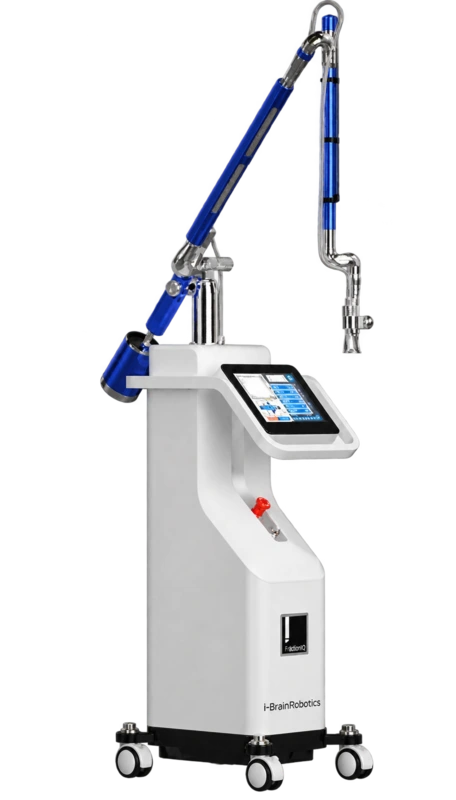
The proposed lab uses FractionIQ from the ENFUZion series. The clinical syllabus covers the procedure, and the operator exercises use the instructions for these models.
Owner & team onboarding
Walk through the installed FractionIQ configuration, approved scanner and accessories, startup and shutdown, room readiness, routine cleaning, and operator logging. Distinguish operator checks from issues that require service.
Practice handover
Build a room-opening checklist and complete a mock fault report with the device identifier, accessory, displayed message and last completed operator check.
Request owner training →Preparation resources
Use the current instructions supplied with your exact model for device-specific indications, checks and settings.